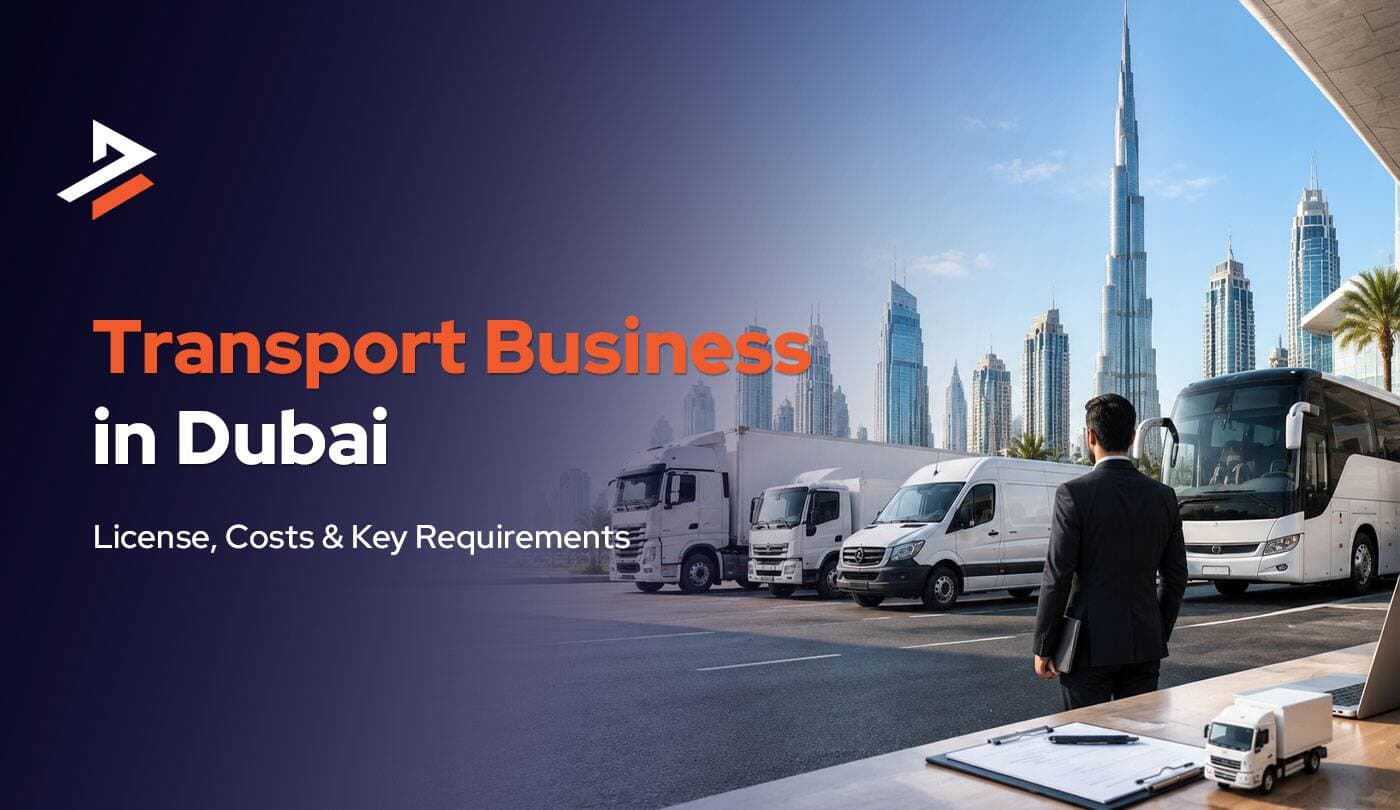
A city can have impressive buildings and busy markets. But none of it moves without transportation. Every delivery that reaches a customer depends on a transport network working behind the scenes.
Dubai has built one of the region’s most connected business ecosystems around this movement. Its extensive road network links commercial districts with industrial areas, while well-connected ports and airports provide access to international markets. Meanwhile, the city’s growing tourism and construction sectors continue to create demand for different types of transport company in UAE.
This creates opportunities for entrepreneurs who are looking for how to start a transport business in Dubai. In this blog, we will understand transport business requirements including licenses that you will need, RTA approvals, documents, and cost considerations.
Why Start a Transport Business in Dubai?
Transportation is closely connected to almost every commercial activity in Dubai. For instance, a retailer needs goods to be moved from warehouses to stores. An eCommerce company needs last-mile delivery. A construction company needs materials transported to project sites. Hotels need staff and guest transportation. Manufacturers need reliable movement of raw materials and finished products.
This creates demand across several segments of the transport market. Dubai also sits between major markets in Asia, Europe, and Africa. Its ports, airports, and road network make it a natural base for businesses involved in moving people and goods.
Types of Transport Businesses You Can Start in Dubai
Transport business in UAE covers several activities. Your business model determines the license activity and the approvals you may need to run your transportation business in Dubai.
Goods and Cargo Transport
Cargo transport businesses move goods using commercial vehicles. This can include light or heavy vehicles depending on the approved activity. Businesses can specialise in areas such as general cargo, refrigerated goods, heavy equipment or other specialised transport.
Passenger Transport
Passenger transport can include staff transportation and school buses. Also, due to large tourist footfall, people need tourist transportation and airport transfer services.
Courier and Last-Mile Delivery
The growth of eCommerce has created demand for businesses that can move parcels from warehouses and distribution centres to customers. Technology also plays a major role here. GPS tracking and delivery management systems can help businesses manage larger delivery volumes.
Refrigerated Transport
Some products cannot be transported in ordinary vehicles. For instance, pharmaceuticals and other temperature-sensitive goods require controlled transportation conditions. This creates a specialised segment for businesses that can provide temperature-controlled logistics.
Vehicle Towing and Recovery
Towing and vehicle recovery services support motorists and vehicles after breakdowns or accidents. The business may require specialised vehicles and additional operational approvals depending on the activity.
Logistics and Transport Support
Not every logistics business needs to operate its own fleet. Freight forwarding and cargo handling can form separate business models.
Transport Company License in Dubai
For people looking for how to open transport company in Dubai generally needs two key layers of authorisation. First, you need a commercial trade license issued by the relevant licensing authority.
For a mainland company, this is generally issued through Dubai’s Department of Economy and Tourism (DET). The license establishes your company as a legal business and must carry the appropriate transport activity.
Second, commercial transport activities require approval from the Roads and Transport Authority (RTA). RTA’s current process refers to this as the Commercial Transport Activity Permit. Transport industry sources also commonly refer to the company-level RTA authorisation as the RTA Operation Card.
This approval enables the company to carry out the approved commercial transport activity and proceed with the related vehicle and operational requirements.
RTA’s current process requires preliminary approval from the licensing authority and then allows eligible companies to apply for activation of their transport activities. Activities requiring approval currently have a stated service time of 3 to 15 days.
How to Start Transport Business in Dubai?
To start a transport business in UAE, you need to build the business around the activity you actually intend to operate.
Here’s the step-by-step process of forming a Dubai transport company.
Step 1: Choose Your Transport Activity
Decide whether you will transport passengers, move goods, provide delivery services, operate rental vehicles or provide logistics support. Be specific about the type of vehicles and services involved as this decision affects your approvals and operating costs.
Step 2: Choose the Right Jurisdiction
The next decision is whether to establish your business on the Dubai mainland or in a free zone. Mainland setup can be suitable for businesses that need to conduct direct transport operations across Dubai and the UAE.
Free zones can be useful for certain logistics and international trade structures. However, a free zone license does not mean that the company can freely operate commercial vehicles on Dubai roads. The practical operating scope depends on the activity and the relevant approvals.
Step 3: Reserve Your Trade Name
Once the activity and jurisdiction are decided, select a trade name that complies with the applicable naming rules. The name should also align with the nature of the business and the proposed legal structure.
Step 4: Obtain Initial Approvals
Certain transport activities require approvals from RTA before the trade license can be issued. RTA provides an NOC service for new trade licenses involving commercial transport activities. The application uses information from the licensing authority and the proposed business activity.
Step 5: Arrange Office and Fleet Space
Transport company requirements can include:
- Office space
- Vehicle parking
- Fleet yard
- Storage facilities
- Warehouse space
- Activity-specific premises
Plan your requirements early to prevent a common problem where the company is licensed but does not have the right operational space to run the business.
Step 6: Complete Transport Approvals
Complete the transport-related approvals and permits applicable to your activity. This can involve RTA requirements for vehicles and drivers.
Step 7: Register Your Vehicles
Commercial vehicles need to meet the applicable registration and technical requirements. The number and type of vehicles will depend on your business model.
Step 8: Hire Drivers and Staff
Transport businesses depend heavily on their drivers and operations team. Drivers need the correct UAE driving license and must meet the requirements applicable to the transport activity.
You should also plan for:
- Driver visas
- Driver training
- Fleet supervisors
- Dispatch staff
- Customer support
- Administrative staff
The staffing model becomes more important as the fleet grows.
Step 9: Arrange Commercial Insurance
Insurance is another major operating requirement. The type of cover depends on the vehicle and transport activity. Fleet operators should consider vehicle insurance along with appropriate business and liability protection. For specialised cargo, additional coverage may be relevant.
Step 10: Open a Corporate Bank Account
A corporate bank account allows the company to manage customer payments, salaries, vehicle expenses, fuel, maintenance, and other business transactions through a proper business structure.
Step 11: Complete Tax Registration and Compliance
Transport companies must also consider UAE tax obligations. VAT registration becomes mandatory for a UAE-resident business when taxable supplies and imports exceed AED 375,000 over the relevant 12-month period or are expected to exceed the threshold within the next 30 days.
Free zone companies should be particularly careful with the assumption that a free zone automatically means 0% Corporate Tax. Qualifying Free Zone Persons can benefit from 0% on qualifying income when the applicable conditions are met. Income that does not qualify can be subject to the standard 9% rate.
Mainland vs Free Zone for a Transport Business in Dubai
The choice between mainland and free zone should follow your operating model.
Here’s a quick comparison table:
| Factor | Dubai Mainland | Free Zone |
|---|---|---|
| Direct Local Fleet Operations | Suitable for companies operating their own commercial vehicles in Dubai subject to RTA approval | Not automatically permitted; direct road operations depend on the activity and required approvals |
| Local Delivery and Distribution | Suitable for businesses making direct UAE deliveries with their own fleet | May require an approved mainland arrangement or other authorised structure |
| Passenger Transport | Can support approved passenger transport activities subject to RTA requirements | Generally more restricted and requires activity-specific confirmation |
| Freight Forwarding | Can be licensed | Often suitable for freight forwarding and logistics coordination |
| International Freight and Re-export | Available | Often suitable for companies focused on international trade and re-export |
| Vehicle Registration | Company can register commercial vehicles subject to RTA requirements | Vehicle operation in Dubai requires the relevant approvals |
| Government and Local Contracts | Can contract directly where the activity and procurement requirements are met | Access depends on the contract, activity and applicable mainland requirements |
| Office and Facility Needs | Physical premises may be required based on the activity | Workspace options vary by free zone but transport operations can require additional facilities |
If your plan is to own trucks, vans or buses and operate them for local commercial transport, mainland setup is generally the more direct route to examine.
If your business mainly coordinates shipments, handles freight forwarding, or manages international logistics without directly operating a local fleet, a free zone structure may be more relevant.
RTA Approvals for a Transport Business in Dubai
The Roads and Transport Authority plays an important role in regulating commercial transport activities in Dubai. Its commercial transport framework covers activities involving goods and passengers. It also includes transport management and rental activities.
RTA requirements can include:
- Commercial transport approvals
- Vehicle registration
- Commercial vehicle permits
- Driver requirements
- Vehicle inspections
- Activity-specific permits
- Route or operational approvals
- Traffic file requirements
The current RTA service information also states that activities requiring approval can take around 3 to 15 days for the approval process. The actual timeline depends on the activity and whether other authorities are involved.
Documents Required for Transport Company Setup in Dubai
The exact documentation varies according to the business activity and licensing authority.
Common documents can include:
- Passport copies of shareholders and managers
- Visa or Emirates ID copies where applicable
- Proposed trade name
- Initial approval documents
- Business plan for certain activities
- Office tenancy documents
- Company formation documents
- Vehicle-related documents
- RTA forms and approvals
- NOC (if applicable)
Specialised activities can require additional documents. For example, a business operating a larger fleet may need to provide additional information about its vehicles and operational capacity.
Transport License Cost in Dubai
Generally, a transport business license in Dubai costs around AED 12,000 to AED 25,000*. However, the exact budget of a complete setup depends on the type of activity and the structure you choose.
RTA approvals and transport authorisations come on top of the trade license. The RTA approval or Operation Card component can cost around AED 3,500 for certain transport setups.
For the exact setup cost of a complete transportation business in Dubai, you can contact Dubiz professionals directly. Book a FREE consultation today.
How to Build a Profitable Dubai Transport Business?
Getting the license gets the business ready to operate. Building an efficient transport operation determines whether it can scale.
The following are the areas listed which deserve your attention from the beginning.
Start With a Focused Service
A new transport company does not need to serve every segment. You could specialise in:
- eCommerce delivery
- Corporate staff transportation
- Refrigerated goods
- Construction materials
- Heavy cargo
- Hotel transportation
- School transportation
- Vehicle recovery
A focused service can make it easier to build the right fleet and target the right customers.
Track Every Vehicle
Fleet visibility becomes increasingly important as the number of vehicles grows. GPS tracking can help monitor routes and vehicle location, which in turn helps in understanding driver behaviour and delivery performance. The data can also help identify inefficient routes and unnecessary vehicle downtime.
Control Empty Trips
Better route planning can help reduce empty kilometres and improve vehicle utilisation. For cargo operators, this can have a direct effect on fuel and operating costs.
Build Recurring Contracts
Recurring contracts can create more predictable demand. Transport business in UAE can explore partnerships with:
- Warehouses
- Retailers
- eCommerce companies
- Hotels
- Schools
- Construction companies
- Manufacturers
- Distribution businesses
The right partnerships can also improve fleet utilisation.
How Dubiz Can Help You Start a Transport Business in Dubai?
A transport business in UAE involves several moving parts from the beginning. You need to identify the right activity. Then you need to select a suitable jurisdiction and complete the relevant licensing and transport approvals. Your visas and compliance requirements also need to fit the business model.
Dubiz can support you through the company formation process and help you understand the requirements linked to your chosen transport activity. From choosing the right setup route to handling licensing and related business requirements, the aim is to give your transport company a clear foundation for operations.
- 9+ years of experience in industry
- 7000 plus company formed successfully
- Reliable ties with the government authorities
- Multi-lingual experts from various fields
- Business ongoing compliance support
Book a FREE consultation with our experts today and start your transport business with Dubiz.
Contact Dubiz:
📞 Call: +971 56 369 5485
💬 WhatsApp: +971563695485
📧 Email: info@dubiz.co
Frequently Asking Questions (FAQS)
Q1. Which license is required for a transport company in Dubai?
The required license depends on the transport activity. Dubai has different commercial transport activities covering areas such as goods transport, passenger transport, rental and transport support. RTA approvals may also be required depending on the activity.
Q2. How much does a transport license in Dubai cost?
A commercial trade license for a transport business can cost approximately AED 12,000 to AED 25,000*. RTA approvals and transport authorisations can add further costs. Vehicles, office space, insurance, visas, and other operational requirements are separate expenses.
Q3. Is RTA approval required for a transport business in Dubai?
Many commercial transportation business in Dubai require RTA approval or permits. The exact requirement depends on the activity. RTA also provides a specific process for obtaining an NOC for new trade licenses involving commercial transport activities.
Q4. Can a free zone company operate a transport business in Dubai?
A free zone company can conduct certain logistics and transport-related activities. However, a free zone license does not automatically authorise direct commercial vehicle operations on Dubai roads. The activity and additional approvals need to be checked before choosing the setup.
Q5. Can foreigners own a transport company in Dubai?
Foreign investors can have 100% company ownership in Dubai under the applicable ownership rules. The ownership structure and requirements depend on the chosen jurisdiction and business activity.
Q6. What documents are required to open a transport company in Dubai?
Common documents include passport copies, visa or Emirates ID documents where applicable, trade name documents, incorporation documents and tenancy documents. Transport activities can require additional RTA or authority-specific documents.
Q7. Is VAT applicable to transport businesses in Dubai?
VAT applies according to UAE VAT rules. A UAE-resident business must generally register for VAT when its taxable supplies and imports exceed AED 375,000 over the relevant 12-month period or are expected to exceed that threshold within the next 30 days.
Q8. Can I get a tourism license in Dubia with one vehicle?
The feasibility of getting a tourism license in Dubai with one vehicle depends on the specific transport activity and its licensing and operational requirements. Some business models can begin with a small fleet while others may require specific vehicle or facility arrangements.
Q9. How long does it take to start a transport company in Dubai?
A straightforward transport company setup can take around 2 to 4 weeks when documents are complete, and the activity does not require lengthy additional approvals. RTA currently lists 3 to 15 days for activities requiring approval.