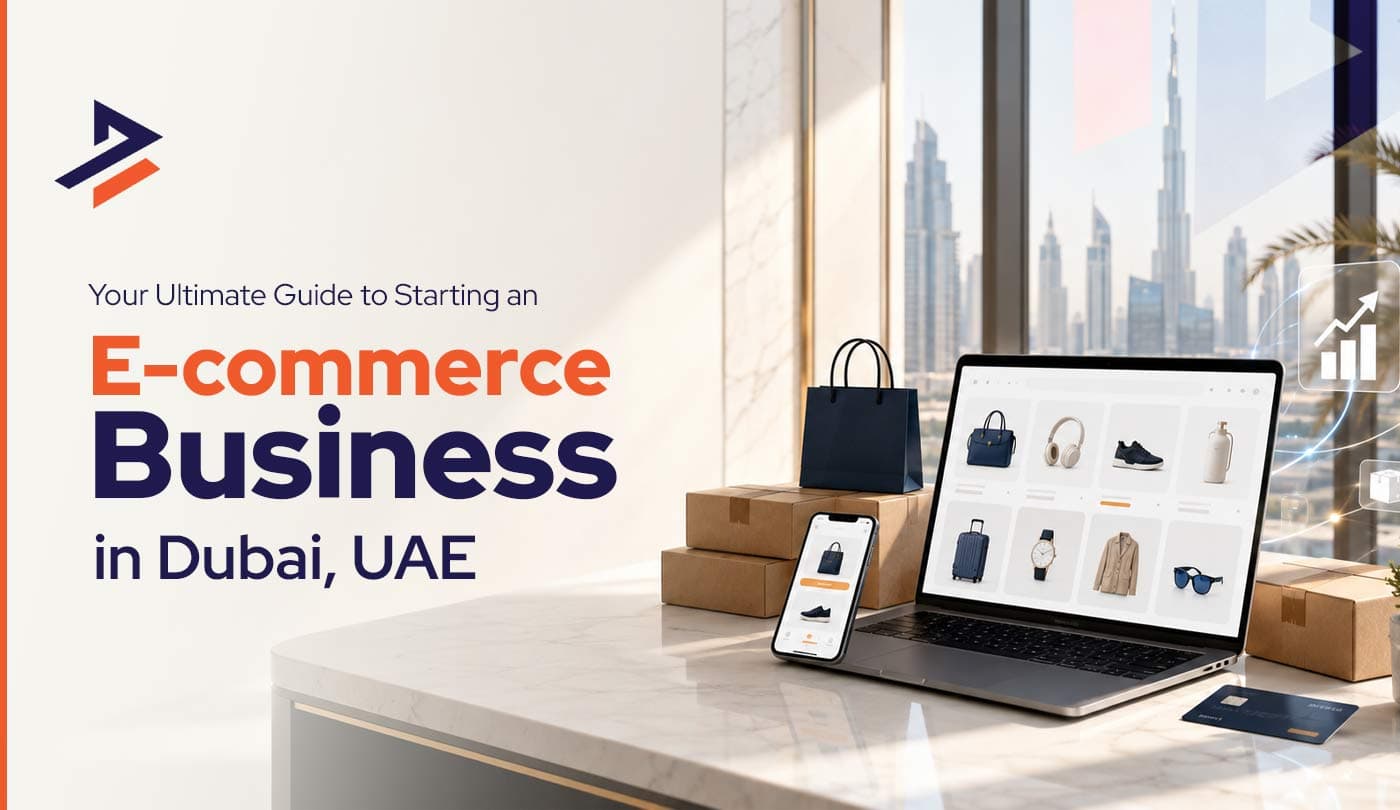
Dubai has rapidly transformed into an attractive digital commerce hub with its high internet penetration, tech-savvy consumers, and government-backed digital initiatives. The Emirate offers the perfect ecosystem for running an E-commerce business.
According to the reports, the UAE’s eCommerce market is valued at $12.42 billion, backed by millions of online shoppers and a dense ecosystem of active eCommerce stores. It is expected to grow at a CAGR of 12.4% till 2030 to reach a valuation of $20.54 billion. The surging adoption of quick commerce and innovative offerings by brands fuels the expansion in ‘metaverse e-commerce’ to meet rapid-evolving consumer preferences.
If you are one of those entrepreneurs considering starting an E-commerce business in this unique, tax-free environment, we have brought this article explaining how to start Ecommerce business in Dubai, highlighting the costs, licensing, benefits, legal considerations and much more.
What is an E-commerce business in UAE?
An e-commerce business is a model where goods and services are bought and sold through online platforms, websites, mobile apps, or online marketplaces. Unlike traditional brick-and-mortar stores, e-commerce companies operate digitally. Therefore, businesses are quickly able to reach customers all over the globe.
An Ecommerce business in Dubai caters to both B2C (business-to-consumer) and B2B (business-to-business) models, integrating payment gateways, logistics providers, and digital marketing tools to ensure seamless online transactions. Moreover, the strong regulatory framework in the UAE supports online trade while ensuring consumer protection and providing a secure environment for digital entrepreneurs.
However, to operate an online business legally, an e-commerce license is mandatory, which authorises them to conduct trading activities through digital platforms and ensures compliance with UAE commercial laws. Businesses can apply for the license either in the mainland or in a free zone, depending on the business model. While a Mainland license provides better reach and access, a free zone license comes with simplified procedures, cost-effective packages, and full ownership benefits.
Some common covered under an e-commerce license include:
- Online retail of physical products
- Selling digital products such as software or e-books
- Online consultancy and professional services
- Operating an online marketplace
- Subscription-based digital platforms
- Dropshipping and third-party fulfillment services
Benefits of starting an Ecommerce business in UAE
Owners of Ecommerce business Dubai can avail many advantages that contribute to the success and growth of their ventures:
- Growing Online Shopping Trends: The increasing online shopping transactions in the UAE are attributed to user behaviour changes after the COVID-19 pandemic and their significant shift towards online platforms.
- Access to a Diverse Customer Base: Dubai’s position as a global hub provides access to markets such as the Middle East, Africa, and Asia, and cater to consumers from vast and varied markets globally.
- Advanced Infrastructure and Logistics: The world-class infrastructure, advanced transportation networks, smooth customs procedures, and logistics facilities allow businesses to deliver products and services to customers more efficiently and promptly.
- Business-Friendly Regulations: The streamlined license processes, favourable investment policies, business-friendly regulations and initiatives set forth by the UAE government support the growth of the e-commerce sector and create a welcoming environment for entrepreneurs and businesses.
- Access to Skilled Workforce: A diverse and skilled workforce that enables businesses to hire some of the most talented and qualified professionals from around the world in areas like marketing, technology, and logistics.
- Tax-Friendly Environment: A favourable tax structure, including 0% personal income tax followed by a 9% corporate income tax in the mainland and 0% corporate tax in Free Zones for specific tax-free business activities, contributes to cost savings and improved profitability for an e-commerce business in Dubai.
Types of E-commerce businesses: How to start E commerce business in UAE
The e-commerce license accommodates diverse business models, based on the products sold, the location of the target audience, logistics/warehousing requirements, and residence visa needs.
- Amazon and other marketplaces (B2C) – Distributing proprietary products, third-party goods, or imported inventory from global suppliers on Amazon or any other marketplaces.
- Professional website (B2C) – An independent digital storefront with an integrated shopping cart, a compliant payment gateway, and a delivery system.
- Own marketplace/portal (B2B) – Connecting third-party vendors with corporate buyers and monetizes via commission per transaction.
- Social e-commerce (C2С) – Covers the marketing and direct sale of self-manufactured goods or professional services via social networks, such as Instagram, TikTok, Telegram, and WhatsApp.
- Digital products (freelancers, C2B, C2C) – Distribution of non-physical assets, including Software-as-a-Service (SaaS), digital subscriptions, media content, online courses, and remote professional consultancy across global networks.
- E-trader (residents and GCC citizens only) – Designed solely for micro-businesses and home-based operations via social media.
How to start an Ecommerce business in Dubai: Step-by-step guide
Here’s a step-by-step guide to help you get started with this exciting venture –
Step 1. Conduct Thorough Market Research and Business Planning
Laying a solid foundation is the key to a successful business setup. Conduct in-depth research to understand local consumer behaviour, preferences, and spending habits, and identify your target market and a specific niche. Draft a business plan outlining the value proposition, marketing strategy, and financial projections.
Step 2. Choose a Business Location: Mainland or Free Zone
Select the right legal territory for your business:
- Mainland: Licensed by the Department of Economic Development (DED), provides greater flexibility in business activities and allows businesses to operate freely within the entire UAE market and internationally.
- Free Zones: Offer significant benefits, including 100% foreign ownership, a tax-friendly environment with customs exemptions, and lower setup costs.
Step 3. Selecting a Business Structure
Decide on the legal framework of the business, such as an LLC, a Free Zone Establishment, or any other. This decision impacts the liability, ownership rules, and tax implications. Therefore, business owners must be mindful when selecting a structure that aligns with their operational needs and future growth plans
Step 4. Registering the Business Name
Brainstorm ideas for the business name as it reflects the brand’s identity. Choose a unique and appropriate name that complies with specific naming conventions. Submit it for approval to the relevant authority and officially secure the trading name.
Step 5. Finalizing a Lease Agreement Step 6. Finalizing a Lease Agreement
You will need to get initial approval for your business from the DED or free zone authority. Along with that, there may be additional approvals required from specific government departments based on your chosen activities.
Step 6. Securing the Business License and Registration
This is the core of the setup process. Submit an application for the e-commerce license along with the necessary documents, such as passport copies and a completed application form, to the chosen licensing authority. Obtain any additional permits required for the specific products or services to ensure full regulatory compliance from the very beginning.
Step 7. Opening a Corporate Bank Account
A corporate bank account can help you process customer payments, pay suppliers, and manage business finances professionally. Set up an account in a UAE-based bank by providing the necessary documentation, including the trade license and passport copies of the shareholders.
Step 8. Building an Online Store
Create a digital presence through e-commerce platforms like Shopify, Magento, or WooCommerce. Design a user-friendly and visually appealing online store and optimize it for search engines (SEO) to improve the visibility of your Ecommerce business Dubai and attract organic traffic.
Step 9. Organizing Logistics and Fulfillment
Efficient logistics ensures seamless customer experiences. Develop a plan to efficiently manage inventory, process customer orders, and handle shipping. Either choose in-house fulfillment of orders or partner with a third-party logistics provider who will store the products and manage packing and delivery.
Step 10. Setting Up Payments and Financial Management
Integrate secure and trusted payment gateways to accept a wide range of payment methods. Implement a robust financial management system to streamline operations and track performance.
Step 11. Ensuring Ongoing Legal Compliance
Ongoing adherence to e-commerce regulations and consumer protection laws, including compliance with data privacy rules and VAT registration with the Federal Tax Authority, is key to building a reputable and sustainable business.
If you are feeling overwhelmed about how to start Ecommerce business in UAE, our dedicated specialists at Dubiz will guide you through every requirement and ensure a seamless and compliant business setup. Book a free consultation and create a personalised setup plan.
Requirements for an E commerce company registration in Dubai
The specific requirements for how to register Ecommerce business in Dubai depends primarily on the type of license and the nature of the business. However, the general requirements include:
- Passport copies of shareholders and managers
- Business plan
- Trade name reservation
- Visa requirements and office space
- Local Sponsor (if required)
Cost of E-commerce company formation in Dubai
The cost of an e-commerce license in Dubai can range from AED 12,900 in the free zone to AED 17,700 with a visa. The actual cost can vary significantly depending on several factors:
- Business Structure
- Business Activities
- Additional Fees for visa processing, office space, and other services.
- Business Size
- Location
To get an accurate estimate for your specific ecommerce business Dubai, it’s recommended to consult with our business setup consultant, who can share tailored quotes based on your business requirements and help you select the most affordable option.
Business ideas: Ecommerce business setup in Dubai
The following businesses in the e-commerce sector require low upfront capital and are ideal for beginners:
1. Online Fashion Brand
Dubai is a fashion‑forward place where the latest styles, including streetwear and modest fashion, are always in demand.
2. Health and Wellness Supplements
There’s a lot of money to be made in the health and wellness industry, thanks to high demand for supplements, herbal teas, and organic goodies.
3. Home Décor and Crafts
There is a market for handmade décor and quirky statement pieces, such as tribal totems or Art Deco pieces, in Dubai.
4. Beauty and Skincare
Organic and halal skincare products are popular and in exceptional demand in the UAE.
5. Meal Kits and Food Delivery
Homemade food delivery services are one of the best ideas for an Ecommerce business in UAE to cater to those who crave a taste of homemade goodness and don’t have time to shop for groceries or prepare meals.
6. Pre‑loved Goods
Thrift shopping is all the rage with the younger demographic that looks for high-end luxury items at lower prices.
7. Subscription Boxes
Mini-sized surprises and treats, such as coffee boxes, skincare packs, fragrance testers, and snack kits, make the most of the demand.
8. Dropshipping Services
Dropshipping is one of the most popular low‑risk models that do not require inventory or a warehouse.
9. Electronics and Accessories
Selling electronic items, such as chargers, phone cases, earbuds, and accessories, can be a profitable Ecommerce business in UAE.
10. Pet Supplies
Toys, treats, and accessories for pets are always in demand among pet owners in the UAE.
11. Online Groceries
A small online grocery store that offers essentials can grow quickly with consistent demand.
12. Fitness Gear
Yoga mats, dumbbells, resistance bands, and other fitness-focused products are always in demand.
13. Baby and Kids’ Products
Parents do not spare any expense for their little ones to make them look and feel their best. Hence, selling children’s clothes, toys, and a whole list of essentials online can help you create a profitable business in the UAE.
14. Digital Products
Selling e‑books, online courses, templates, or guides is one of the easiest online businesses for beginners.
15. Online Coaching or Consulting
Fitness coaching, marketing advice, and tutoring are viable options that do not require an office or a warehouse.
Summing up: E-commerce business in Dubai
Starting an Ecommerce business in Dubai offers immense opportunities for those looking to leverage its business-friendly environment and set up a thriving online business. It is indeed one of the most accessible and scalable business models. However, to stay ahead of the competition, you need to keep up with the latest market trends and continuously adapt your strategies.
With the right license, infrastructure, and marketing strategy for e-commerce businesses in the UAE, entrepreneurs can build highly profitable online ventures catering to the demands of both regional and global markets. Dubai’s supportive regulatory environment further makes it easier for digital ventures to grow and scale.
Avail our best services for your Ecommerce business setup Dubai
Dubiz consultancy offers end-to-end support for entrepreneurs planning an E commerce company formation in UAE. Our business experts understand the intricacies of how to set up an Ecommerce business in Dubai and hence, can provide the right assistance in selecting the right jurisdiction, applying for a license, opening a corporate account, and ongoing compliance to increase the chances of success for your business in the UAE.
We offer a range of services tailored to the needs of entrepreneurs and businesses:
- Final business registration
- Securing licenses and approvals
- Personal or corporate bank account opening
- Structuring for long-term growth of business
Thus, by partnering with Dubiz, you not only get the benefit of our in-depth market knowledge, transparent pricing, and industry expertise but also receive comprehensive support in taxation and compliance.
Connect with Dubiz today and turn your entrepreneurial vision into a fully operational business.
📞 Call: +971 56 369 5485
💬 WhatsApp: +971563695485
📧 Email: info@dubiz.co
Frequently Asked Questions (FAQs) – Ecommerce business in UAE
Q1. Can I run my Ecommerce business in UAE remotely?
Yes, you can run your UAE e-commerce business fully remotely. Many free zones allow for remote management, which often comes with regular visits for certain legal and operational matters.
Q2. Do I need a physical office for a UAE E commerce business setup?
Yes, mainland companies usually require physical office space, whereas some free zones provide virtual offices. The specific requirement depends on the business structure and license type.
Q3. Can foreigners own their Ecommerce business in UAE?
Yes, foreigners can own their online business in most free zones. However, recent reforms allow 100% foreign ownership for many business activities in the mainland.
Q4. What are the best business ideas for e-commerce businesses for beginners in Dubai?
Beginners can sell dropshipping niche products, handmade crafts online, or offer digital services with low initial investment.
Q5. Is dropshipping legal in Dubai? Is dropshipping legal in Dubai?
Yes, dropshipping is completely legal in the UAE. However, to operate legally, you must obtain the necessary permits and comply with the regulations. It is advisable to hire an expert to ensure you get the right licenses and approvals at the right time.
Q6. Is it better to start an e-commerce business in a Dubai free zone or mainland?
Both options can be suitable, depending on your target market and business needs. A free zone may offer flexible packages and setup benefits, while a mainland company can be suitable for businesses targeting customers across the UAE. The right choice depends on your activity, sales model, and expansion plans.
Q7. How much does it cost to start an e-commerce business in Dubai?
Starting an e-commerce business in Dubai costs around AED 12,900 for a free zone licence and AED 17,700 with a visa. The final cost depends on your licence, visa, and business setup requirements.