For years, businesses looked at Dubai as a place to import/export products, open offices, manage global operations, or build an international brand presence. Manufacturing was rarely the first thing people associated with the UAE. That perception is changing fast.
More businesses are now exploring Dubai for industrial and production operations, especially those focused on exports, packaging, assembly, and regional distribution.
But setting up a manufacturing company in the UAE is very different from opening a normal trading or consultancy business. There are additional approvals, industrial compliance requirements, warehouse regulations, municipality inspections, environmental clearances, and activity-specific conditions involved.
This guide breaks down the complete process of getting a manufacturing license in UAE and the key factors businesses should consider before setting up their manufacturing operations in Dubai.
What is a Manufacturing License in Dubai?
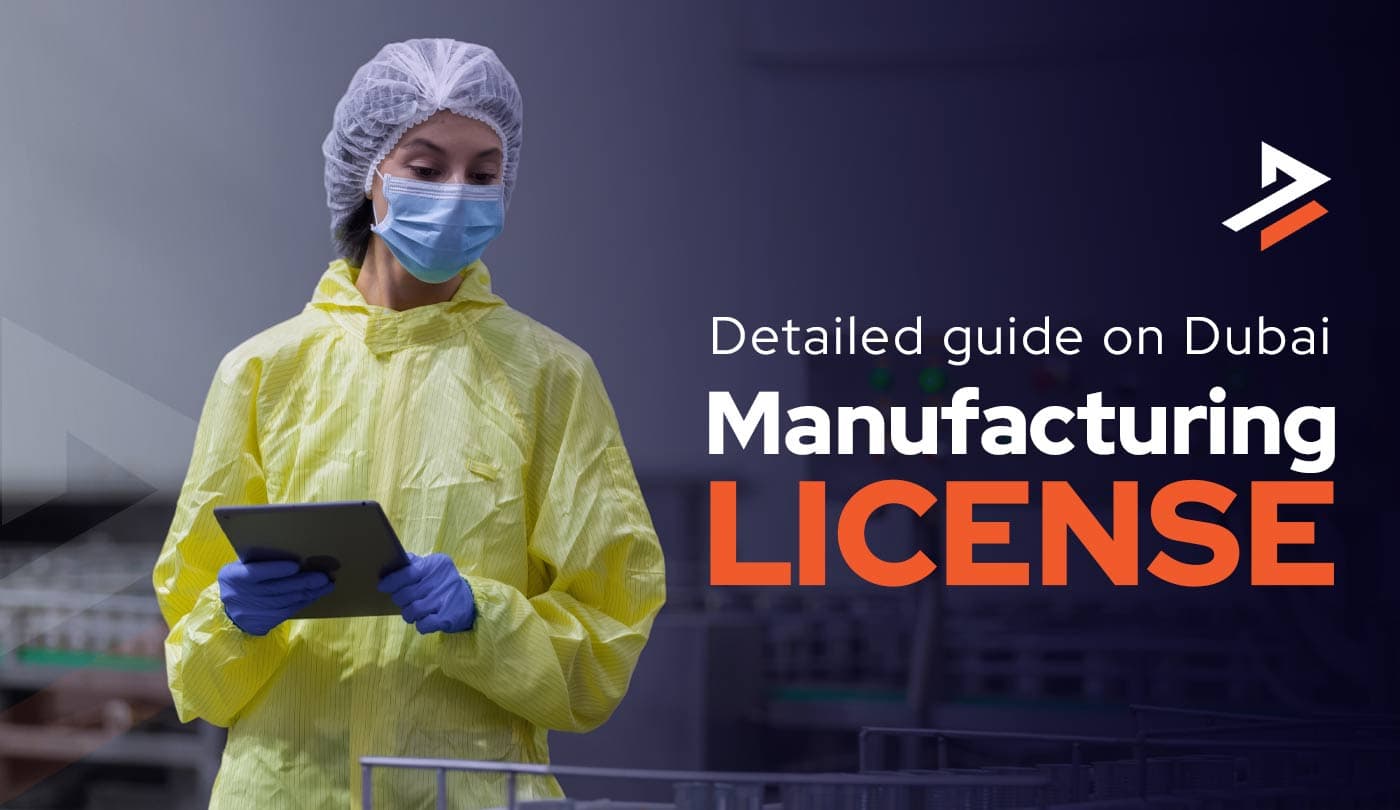
A manufacturing license in UAE, also known as an industrial license, allows businesses to legally manufacture, process, assemble, package, or produce goods within the country.
Unlike commercial licenses, manufacturing licenses involve physical industrial operations. That means businesses must comply with additional safety, environmental, technical, and operational regulations.
This license is issued either by:
- The Department of Economy and Tourism (DET) for mainland Dubai businesses
- Or the relevant free zone authority if you choose a free zone setup
Depending on your activity, you may also need approval from the Ministry of Industry and Advanced Technology (MoIAT), Dubai Municipality, Civil Defense, and other sector-specific authorities.
A manufacturing license in Dubai is commonly used for industries like:
| Food and beverage production | Garments and textiles | Packaging and labeling | Plastic manufacturing | Electronics assembly |
| Metal fabrication | Furniture manufacturing | Chemicals and industrial products | Cosmetics and personal care products | Machinery and equipment production |
If you are unsure whether your activity falls under commercial trading or industrial manufacturing, Dubiz can help you identify the correct business activity and licensing structure before you begin the setup process.
Key Benefits of Manufacturing in Dubai
Dubai is arguably the most famous city in the world, with state-of-the-art infrastructure, world-class facilities, and global connectivity. The city strategically connects Asia, Europe, Africa, and the Middle East. Starting a manufacturing business here means you get access to world-class ports, airports, and logistics infrastructure.
Key benefits include:
- 100% foreign ownership available in most sectors
- Growing industrial free zones and ready-built manufacturing facilities
- Customs duty exemptions on machinery and raw materials in certain cases
- Access to GCC and international export markets
- Government initiatives supporting industrial growth
- Competitive corporate tax environment
The UAE is also attracting businesses that want faster access to global markets while reducing supply chain dependency on a single country. For export-focused businesses, Dubai can work both as a manufacturing base and a global distribution hub.
Types of Manufacturing Activities Allowed in Dubai
The UAE supports a wide range of manufacturing industries. Some businesses only require light assembly or repacking units, while others establish full production plants with machinery, industrial storage, and export operations.
The activity you choose plays a major role in determining the type of approvals required, industrial zone you can operate in, facility specifications, utility requirements, and compliance obligations.
That is why selecting the correct manufacturing activity at the beginning is extremely important.
Top 5 Popular Manufacturing Industries in Dubai
| Industry Type | Common Activities |
|---|---|
| Food & Beverage | Food processing, bottled products, bakery production, packaged foods |
| Textile & Garments | Fabric production, garment manufacturing, stitching and finishing |
| Industrial & Metal | Steel works, metal fabrication, machinery assembly, spare parts |
| Consumer Products | Cosmetics, plastics, furniture, electronics, packaging |
| Specialised Manufacturing | Pharmaceuticals, chemicals, healthcare products, industrial materials |
Businesses dealing with chemicals, medical products, food manufacturing, or hazardous materials usually go through stricter inspection and compliance procedures.
Manufacturing License in Dubai Mainland vs Free Zone
When businesses decide to apply for a manufacturing license in Dubai, they need to choose between mainland and free zone setup. Both options offer advantages, but the right choice depends on your business goals, target market, facility requirements, and operational plans.
If your main focus is selling directly within the UAE market, mainland may offer more flexibility. If your business is export-focused and you want simplified setup procedures, industrial free zones can be highly attractive.
Mainland vs Free Zone Manufacturing Setup
| Feature | Mainland Manufacturing | Free Zone Manufacturing |
|---|---|---|
| Market Access | Can sell directly across UAE | Mainly export-focused |
| Ownership | 100% foreign ownership available for most activities | 100% foreign ownership |
| Industrial Facility | Factory or warehouse required | Ready industrial units available in many zones |
| Setup Process | Multiple external approvals | Often faster and streamlined |
| Best For | UAE market operations and large-scale manufacturing | Export businesses and SMEs |
| Popular Locations | Dubai Mainland, Abu Dhabi Mainland | IFZA, JAFZA, RAKEZ, KEZAD, Dubai Industrial City |
Many businesses also use hybrid models. For example, they may operate a warehouse or light manufacturing unit in a free zone while distributing products through mainland partnerships.
If you are not sure whether mainland or free zone is the better option for your manufacturing activity, then experts Dubiz can help you compare costs, approvals, and operational flexibility based on your business goals.
Manufacturing License Requirements in Dubai
Manufacturing businesses go through a more detailed setup process compared to regular trading or professional companies. Authorities need to ensure that your facility, machinery, production systems, storage setup, and operational processes meet the required industrial, environmental, and safety standards.
The exact requirements vary depending on your:
- Manufacturing activity
- Production scale
- Chosen jurisdiction
- Facility type
For example, a small packaging unit will not meet the same compliance requirements as a chemical production facility or pharmaceutical manufacturing plant. Similarly, those of a food manufacturing business will differ from a textile business in Dubai.
Still, there are certain standard requirements that apply to most industrial businesses in the UAE.
Basic Requirements for Manufacturing License in Dubai
| Requirement | Why It Is Needed |
|---|---|
| Trade Name Reservation | To secure your company name and activity |
| Initial Approval | Permission to proceed with industrial setup |
| Industrial Facility | Mandatory warehouse, factory, or workshop space |
| Lease Agreement / Ejari | Proof of physical operational premises |
| Production Details | Authorities review manufacturing processes |
| Machinery List | Helps evaluate industrial operations and utilities |
| Layout & Safety Plan | Required for inspections and compliance approvals |
| External Approvals | Needed for regulated or specialised industries |
Unlike many service businesses, manufacturing companies cannot operate using virtual office setups. Your facility must match your actual operational requirements.
Authorities may inspect ventilation systems, fire safety arrangements, storage structure, waste disposal setup, electrical capacity, and machinery placement before granting final approvals.
This is one of the biggest reasons businesses should finalise their operational plan properly before leasing an industrial unit.
Step-by-Step Process to Get a Manufacturing License in Dubai
One of the most common reasons for delays in the industrial licensing process is that companies start warehouse leasing, fit-outs, or machinery purchases before understanding approval requirements properly. A structured approach helps businesses avoid redesigning costs, rejected applications, and unnecessary compliance issues.
Here is how the process usually works.
Step 1: Finalise the Manufacturing Activity
Everything starts with identifying the exact industrial activity your business will perform. This decision affects almost every part of the setup process, including approvals, warehouse requirements, utility needs, compliance obligations, and licensing authority.
Step 2: Choose Between Mainland and Free Zone
Businesses planning to sell directly across the UAE market often prefer mainland setups for operational flexibility. On the other hand, export-focused businesses commonly choose industrial free zones because of simplified setup procedures, logistics advantages, and integrated industrial infrastructure.
Step 3: Reserve the Trade Name and Get Initial Approval
Once the activity and jurisdiction are finalised, businesses apply for trade name reservation and initial approval. At this stage, authorities review the proposed business activity, shareholder details, and operational structure. This approval acts as the official permission to proceed further with the industrial setup process.
Step 4: Secure an Industrial Facility
A physical facility is mandatory for manufacturing businesses. Depending on the activity, this may include a warehouse, production unit, industrial workshop, assembly facility, or factory space. Authorities usually review tenancy contracts, facility layouts, zoning compatibility, and utility capacity before moving to the next stage.
Step 5: Obtain External Approvals
This stage is where industrial licensing becomes more technical. Depending on the nature of the business, approvals may be required from Dubai Municipality, Civil Defense, MoIAT, food safety authorities, environmental departments, health authorities, or other regulators. Businesses operating in food, chemicals, cosmetics, healthcare, or industrial production usually face stricter compliance procedures.
Step 6: Submit Final Documents and Complete Licensing
After obtaining the required approvals, businesses submit the complete documentation package along with licensing fees. Authorities then conduct final reviews before issuing the industrial License. The accuracy of documents at this stage plays a major role in avoiding unnecessary delays.
Step 7: Complete Operational Registrations
Once the manufacturing License is issued, businesses can proceed with operational formalities such as immigration registration, employee visas, customs registration, VAT registration, machinery imports, and utility activation. Many businesses also apply for MoIAT industrial registration after receiving the trade License.
Step 8: Begin Industrial Operations
After approvals, inspections, registrations, and facility preparation are completed, businesses can officially begin manufacturing operations. Industrial businesses must continue maintaining safety standards, facility compliance, documentation records, and regulatory renewals to operate smoothly long-term.
Manufacturing licensing involves multiple authorities, technical approvals, and operational planning decisions. Dubiz helps businesses simplify the process by managing approvals, documentation, jurisdiction selection, and industrial setup support from start to finish.
MoIAT Industrial Production Certificate Explained
One of the most important parts of industrial setup in the UAE is the MoIAT Industrial Production Certificate. Many businesses confuse this with a regular trade License. But they are not the same.
Your trade License allows your business to operate. The MoIAT certificate officially registers your industrial production activity at the federal level. This registration can help businesses access several industrial advantages in the UAE.
Benefits of MoIAT Registration
- Customs duty exemptions on machinery
- Reduced import costs on raw materials
- Recognition under UAE industrial programs
- Access to industrial incentives in some sectors
- Easier participation in local manufacturing initiatives
To apply for MoIAT registration, businesses generally need to show a valid industrial License, production details, machinery information, facility documents, process flow diagrams, and approvals from relevant authorities.
For export-oriented manufacturers, this certificate can significantly improve long-term operational efficiency.
Manufacturing License Cost in UAE
Cost of a manufacturing license in Dubai starts at AED 12,460. The environmental fee and NOC from the Healthcare Department costs around AED 4,500 and the Civil Defence approval costs AED 2,500.
One of the biggest misconceptions businesses assume is that the manufacturing License fee is the total setup cost. In reality, industrial setup expenses depend on several operational factors.
For example, a light packaging or assembly unit may require a relatively smaller investment compared to a large industrial production facility with heavy machinery and specialised approvals.
Businesses should also account for long-term operational expenses instead of only focusing on initial licensing costs.
Main Cost Factors in Manufacturing Setup
| Cost Component | What Impacts the Cost |
|---|---|
| Industrial License | Activity type and jurisdiction |
| Warehouse / Factory | Facility size, location, and utilities |
| External Approvals | Industry-specific compliance requirements |
| Fit-Out & Infrastructure | Machinery, ventilation, safety systems |
| Employee Visas | Workforce size and visa allocation |
| Operational Setup | Logistics, imports, staffing, utilities |
Industries like food manufacturing, pharmaceuticals, chemicals, and cosmetics often involve additional compliance expenses because of stricter regulatory standards.
That is why businesses should approach industrial setup with a proper operational budget instead of viewing it as a simple licensing expense.
Common Challenges Businesses Face During Manufacturing Setup
Dubai offers excellent infrastructure and strong opportunities for industrial businesses. But the manufacturing setup is still far more operationally detailed than opening a regular trading company.
Many businesses enter the process assuming it will work exactly like standard company formation. And that is where delays usually begin.
The most common problems are not caused by the licensing authorities themselves. They usually happen because businesses underestimate planning requirements.
Common Challenges During Industrial Setup
| Challenge | Why It Creates Problems |
|---|---|
| Choosing the Wrong Jurisdiction | Some zones may not allow specific industrial activities |
| Leasing the Wrong Facility | Zoning, utilities, or layout may fail approval requirements |
| Incomplete Documentation | Missing details delay approvals and inspections |
| Early Fit-Out Work | Businesses often start construction before approvals |
| Ignoring Environmental Compliance | Can lead to redesigns and approval rejection |
| Underestimating Operational Costs | Utilities, staffing, and warehouse costs add up quickly |
Many businesses also struggle after licensing because industrial operations involve much more than approvals. Once the facility becomes operational, companies still need to manage customs documentation, raw material imports, workforce planning, warehouse compliance, export procedures, industrial safety standards, and ongoing inspections.
This is why proper planning at the beginning becomes extremely valuable. A well-structured setup process saves both time and operational costs.
Popular Free Zones for Manufacturing in UAE
The UAE has several industrial free zones specifically designed for manufacturing and production businesses.
Each zone offers different advantages depending on the industry and operational scale. Some are better suited for logistics-heavy industries, while others are more affordable for SMEs and light manufacturing.
Popular UAE’s industrial free zones
- JAFZA – Strong logistics connectivity near Jebel Ali Port
- IFZA – Flexible setup solutions often preferred by international entrepreneurs and growing businesses
- Dubai Industrial City – Built specifically for industrial and manufacturing businesses
- KEZAD – Large-scale industrial ecosystem with integrated infrastructure
- RAKEZ – Cost-effective option popular among SMEs and exporters
- SAIF Zone – Suitable for warehousing and trading-linked manufacturing
The right free zone can impact your operational cost, approvals, expansion flexibility, and export efficiency for years. Dubiz can help businesses compare industrial jurisdictions based on their exact manufacturing goals.
How Long It Takes to Get a Manufacturing License in Dubai?
Simple manufacturing setups with minimal external approvals may be completed within a few weeks. However, highly regulated industries can take longer because of inspections and compliance procedures.
The timeline depends on the type of manufacturing activity, external approvals required, facility readiness, and documentation accuracy.
On average:
- Basic industrial licensing may take 2 to 4 weeks
- Complex manufacturing approvals may take 1 to 3 months
- Environmental assessment processes can further extend timelines
One of the biggest reasons for delays is incomplete documentation. Businesses often start leasing or facility fit-outs before understanding approval requirements properly.
Manufacturing License Renewal in UAE
A manufacturing License in the UAE must be renewed periodically to keep the business legally active.
Renewal usually requires:
- Valid tenancy contract
- Updated approvals if applicable
- Payment of renewal fees
- Active immigration records
- Compliance with operational regulations
Businesses operating under MoIAT registration may also need periodic inspections or certificate renewals depending on the industry.
Failure to renew Licenses on time can result in penalties, operational restrictions, immigration issues, and suspension of business activities. Keeping compliance documentation organised throughout the year makes the renewal process much smoother.
Start Your Manufacturing Business in Dubai with Dubiz
Setting up a manufacturing business in Dubai is not just about getting a License. It is about building the right operational structure from the beginning. From choosing the right jurisdiction and industrial activity to securing approvals, leasing facilities, and managing compliance, every step matters.
The good news is that Dubai continues to create strong opportunities for manufacturers, exporters, and industrial businesses looking to grow internationally. With the right planning, the UAE can become a powerful base for production, logistics, exports, and regional expansion.
If you are planning to apply for a manufacturing License in Dubai or anywhere in the UAE, Dubiz can help you:
- Choose the right setup structure
- Compare mainland and free zone options
- Manage approvals and documentation
- Assist with industrial licensing
- Support MoIAT registration
- Simplify the complete setup process
Get in touch with Dubiz today for a FREE consultation session with our business setup experts.
Frequently Asked Questions
Q1. What is the difference between industrial and manufacturing Licenses?
The terms are often used interchangeably. A manufacturing License is generally a type of industrial License that specifically covers production and manufacturing activities.
Q2. Can foreigners own 100% of a manufacturing company in Dubai?
Yes. Most manufacturing activities in Dubai and the UAE now allow 100% foreign ownership.
Q3. Is a warehouse mandatory for a manufacturing License in UAE?
Yes. Manufacturing businesses require a physical industrial facility such as a warehouse, workshop, or factory unit.
Q4. How much does a manufacturing License cost in UAE?
The manufacturing License cost in UAE usually starts from around AED 10,000 to AED 30,000+, excluding warehouse, approvals, visas, and operational expenses.
Q5. How long does it take to get a manufacturing License in Dubai?
The timeline can range from 2 weeks to several months depending on the activity type and external approvals required.
Q6. Which authorities approve manufacturing businesses in Dubai?
Approvals may involve DET, MoIAT, Dubai Municipality, Civil Defense, MOCCAE, Food Safety authorities, and other regulators depending on the industry.
Q7. Can free zone manufacturing companies sell products in mainland UAE?
Yes. However, they may need a distributor, mainland branch, or customs clearance process depending on the business structure.
Q8. Which industries are popular for manufacturing in UAE?
Popular sectors include food processing, packaging, textiles, plastics, cosmetics, electronics, metal fabrication, and furniture manufacturing.