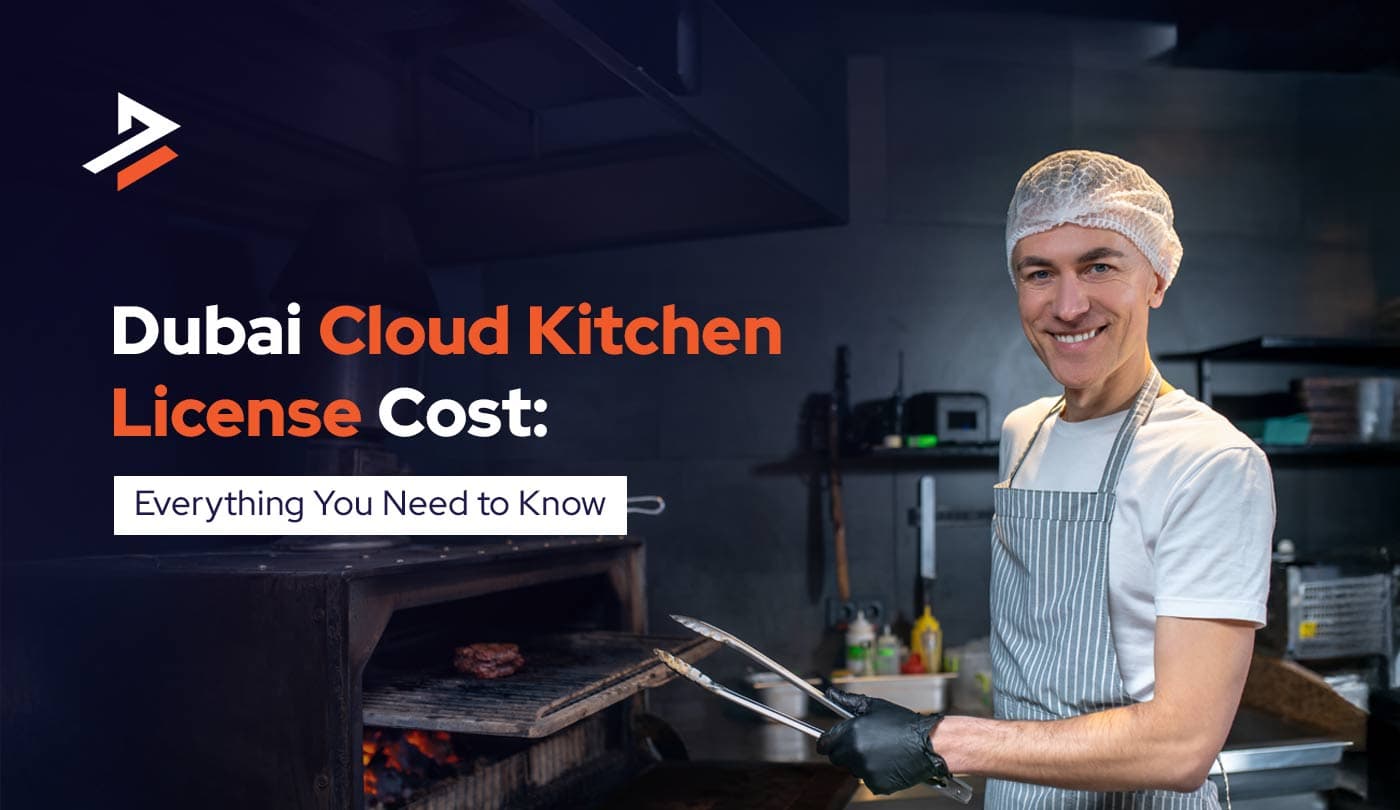
The Food & Beverage market in Dubai has significantly transformed in recent years, leading to the emergence of cloud kitchens as a prominent trend in the industry. The major expense to consider while undertaking this opportunity is licensing.
The cloud kitchen license cost in Dubai typically covers fees for the trade license and the food license, along with business registration, food safety certifications, location approvals, and several other overheads. The size and rent of the kitchen, equipment, staff, marketing, technology, ingredients, insurance, and mandatory licenses are the key costs involved in the process.
Given the growing interest and adoption of the cloud kitchen concept, we have prepared this detailed guide giving full costing of cloud kitchen business in Dubai and the step-by-step procedure.
What is a cloud kitchen in Dubai? What is a cloud kitchen in Dubai?
A cloud kitchen, also known as a ghost kitchen or virtual kitchen, is a food business that operates without a dine-in area and prepares meals for online orders only. With the rise in food delivery apps like Talabat, Deliveroo, and Careem in the UAE, this business model has grown rapidly, offering low-overhead entry for food entrepreneurs.
As population and tourism continue to grow, cloud kitchens are expected to lead the market without incurring the high costs of traditional eateries.
Top compelling reasons to start a cloud kitchen in Dubai
The changing consumer habits, rising operational costs, and the growing dominance of food delivery services are driving growth for the cloud kitchen sector in Dubai.
Furthermore, with dozens of virtual kitchen brands and shared kitchen operators scaling rapidly across the city, Dubai has emerged as a leader in this innovation.
Here’s why you must consider a cloud kitchen setup in this vibrant city –
High Real Estate Costs:
Eliminates the need for renting or purchasing premium properties, rather can be operated in industrial or low-rent areas, significantly reducing overheads and helping kitchen owners expand without the burden of expensive leases or lavish interiors.
Delivery-First Culture:
Efficiently serves the demand of a tech-savvy, convenience-driven population, with optimized workflows and minimal wait times.
Diverse Culinary Demand:
Allows kitchen operators to launch multiple virtual brands from a single location, catering to niche tastes and demand for varied cuisines without the complexity of managing separate storefronts.
Strong Technology Infrastructure:
An ideal environment with digital infrastructure, featuring high internet penetration, smartphone usage, and advanced logistics, helping kitchen operators use centralized business management systems, real-time inventory tracking, and integrated delivery platforms to streamline operations and scale efficiently.
Low Barrier to Entry and Fast Scalability:
Requires lower upfront investment compared to traditional restaurants and offers faster go-to-market timelines, enabling entrepreneurs to test concepts easily, iterate on menus, and pivot quickly based on consumer feedback.
Large Audience Pool:
Easy to reach masses of people by listing the menu on digital and cloud platforms, thereby maximizing the sales and bringing in higher profits.
Easily Manageable:
Fewer tasks to handle and the ability to effortlessly manage the timely delivery of food, resulting in enhanced user experience and customer satisfaction.
Low Risks – High Profits:
Doesn’t require high overhead costs or a large operational team; instead, a mobile application or a user-friendly website featuring the offerings and delicious menu can do the job.
Choosing the right location for cloud kitchen in UAE
One of the most important decisions to make before determining the cost of a cloud kitchen license in Dubai is choosing the right business jurisdiction: Mainland or Free Zone. Here’s a quick overview of each:
Mainland Setup: –
- Overseen by the Department of Economy and Tourism (DET), formerly known as DED.
- Allows business owners to operate anywhere in Dubai and across the UAE without restrictions on local trading.
- Requires a trade license and a food license from Dubai Municipality to operate legally.
- Allow 100% foreign ownership for most food-related activities, eliminating the need for a UAE national partner.
- May require a local service agent if the selected falls under legacy categories.
Free Zone Setup: –
- Offers a streamlined setup process and 100% foreign ownership.
- Ideal for entrepreneurs focused on digital-first operations or international expansion.
- Regulated and licensed by the respective Free Zone authority.
- Doesn’t require a local sponsor or agent, giving business owners full control of their business and intellectual property.
- Restricts trade directly with mainland customers unless a local distributor is appointed, or third-party delivery platforms are used for selling products.
- Ability to run multiple virtual brands from a single kitchen.
Detailed breakdown of cloud kitchen license cost in Dubai
The cost of a cloud kitchen license in Dubai varies by jurisdiction and business scale. However, the overall cost may range from AED 17,900 to AED 22,000, covering expenditures like
- Cloud kitchen license fees
- Initial approval fee
- Trade name fee
- MOA and LSA document fee
- Visa fee
- Office space rent
- Business registration fee
- Additional permit/license fee (RTA, Halal Certification Authority, etc.)
A cloud kitchen requires approval of Dubai Municipality, which may cost around AED 7,000, and Food Safety Compliance, which may cost up to AED 4,000.
To avoid any hidden charges or surprises in the future, it’s worth consulting our business advisors at Dubiz, who will help you navigate updates, fast-track approvals, and ensure an efficient and affordable setup that aligns with current regulations.
Key costs included in cloud kitchen license fees in Dubai
While assessing the cost of a cloud kitchen license in Dubai, business owners must consider several factors, such as –
Size of the kitchen:
When looking for a kitchen space, assess your business requirements and research the surrounding area to ensure that your offerings resonate with the local population. Also, determine the size of the space or facility you seek to rent and the associated rental costs.
Equipment for the kitchen:
The expense of necessary equipment is one of the major costs you will incur when starting a cloud kitchen business in Dubai. The basics include pots, pans, refrigerators, freezers, and specialised equipment for preparing a specific type of cuisine. Include expenses for utilities, including gas, electricity, and water. Make sure to stick to a defined budget to avoid overspending.
Number of employees:
A cloud kitchen may require at least 1 to 3 employees, depending on the number of orders received on a daily basis. Unlike traditional restaurants, cloud kitchens need fewer staff members, but as the business grows, the number of employees also needs to be increased to handle the surging demand.
Marketing expenses:
This is a key element to connect with consumers and grow the customer base. Here’s a breakdown of different marketing techniques: –
- Logo: A recognisable symbol that accurately reflects the brand.
- Website: A professional website that offers a distinctive user experience and includes an online menu, the restaurant’s story, and a contact form, so that customers learn more about the business and get in touch.
- Social media accounts: An account across all the major platforms used by audiences to boost posts or create ads so the business can reach a larger audience.
- Photography: A professional photographer who can take mouth-watering images of the food and attract more people to try it.
Technology for food operations:
An essential in the cloud kitchen license cost in Dubai, required for managing incoming orders, compiling reports, or identifying the best-selling items on the menu. A top-notch Point of Sale (POS) system and food technology software enable business owners to track everything happening in their business.
Cost of food ingredients:
Allocate a budget for high-quality, fresh ingredients so the business can maximise profit on each menu item. Being aware of the customers’ habits can help avoid ordering too many ingredients.
Insurance requirements:
Investing in employer insurance and public liability insurance can ensure that the business stays protected in cases of employee accidents or unfortunate incidents in the workplace, or during legal disputes with customers.
Licenses and permits:
Cloud kitchens must bear the costs associated with the necessary licenses and permits to operate legally in Dubai.
Additional costs: Cloud kitchen license fees in UAE
As cloud kitchen owner, you must also plan for the following additional expenses:
- Marketing plan development: The business may have to incur expenses in creating a social media plan, working with influencers, creating a loyalty program, offering rewards for referrals, running promotions and discounts, and targeted advertising.
- Data analysis: This is essential for business owners to understand their customers more deeply. For that, you may need to hire a freelancer or a digital marketing agency that can provide a lot of useful information, such as ordering habits of customers, the best advertising campaigns, and the most successful dishes among customers.
Practical tips to manage cloud kitchen license cost in UAE
Worried about overrunning the budget? Here’s how you can manage your costs –
- Choose the Right Jurisdiction: Consider ownership, market access, costs, scalability, and operational scope while choosing a jurisdiction.
- Start with a Shared Kitchen: Opting for a shared kitchen can reduce upfront investment, simplify compliance, and allow you to test your brand before committing to a standalone facility.
- Budget for Legal Support: Seeking professional expertise can streamline licensing, inspections, and renewals, and manage documentation and approvals, saving thousands annually.
- Consider License Renewals and Hidden Costs: Always budget above initial setup costs to cover hidden expenses like annual renewals, inspection fees, signage permits, and aggregator commissions.
Documentation requirements: Cloud kitchen license cost in Dubai
Cloud kitchen owners must submit a comprehensive set of documents to various regulatory bodies. These include:
- Emirates ID
- Owner’s passport and visa copy
- Lease agreement for the facility
- Business plan
- Trade name approval
- Health and safety inspection approval
- Food license
- Fire safety approval from Dubai Civil Defense
Consult our legal professionals at Dubiz to understand and meet all the requirements professionally and accurately.
Key license requirements of cloud kitchen in Dubai
To operate a cloud kitchen successfully in Dubai, you need to secure multiple licenses and permits, each governed by different authorities. Here’s a detailed breakdown of the major regulatory requirements, their purpose, and the estimated cloud kitchen license cost covered under each permit.
Trade License –
- The foundation of the cloud kitchen business.
- Issued either by the Dubai Department of Economy and Tourism (DET) for mainland setups or by a relevant Free Zone Authority in a free zone.
- Legally establishes the business and defines its jurisdiction.
- The overall cloud kitchen license cost in mainland covers the trade name reservation fee, initial approval fee, and core license issuance fee.
- The cloud kitchen license fees in Dubai Free Zone depend on the business scope and the free zone.
Food License –
- Issued by Dubai Municipality as a confirmation that the kitchen complies with hygiene, safety, and layout standards.
- A mandatory requirement for businesses involved in preparing, storing, and handling of food.
- Issued to kitchens that meet HACCP (Hazard Analysis and Critical Control Points) standards and staff who hold valid food handler certifications.
- The cost of a food license depends on the kitchen scale and complexity.
Delivery Service Permit –
- Issued by the Dubai Roads and Transport Authority (RTA) or relevant authorities to businesses that operate their own delivery fleet, rather than relying solely on third-party platforms.
- Mandates compliance with delivery regulations, safety logistics, and aggregator contracts.
- Covers vehicle registration, driver licensing, and safety compliance costs, and is essential for businesses managing in-house logistics.
Central Production Unit License –
- Issued by Dubai Municipality or the relevant Free Zone Authority to businesses that operate a central kitchen and supply to multiple brands or outlets, especially within a multi-kitchen or multi-brand network.
- Allows centralized food production and distribution across branches or virtual brands.
Halal License –
- Granted by the UAE Halal Certification Authority to kitchens that serve Halal food or plans to export to Muslim-majority markets.
- The process involves ingredient audits, supplier verification, and facility inspections to ensure compliance with Islamic dietary laws and halal standards.
Starting a cloud kitchen in Dubai: Step-by-step process
A cloud kitchen can be a rewarding business in Dubai. However, to build a strong foundation, you must ensure to follow the right process. Here’s a detailed guide explaining the all the steps clearly –
Step 1: Research and Develop the Concept
Before investing any money, study the market. Research the target customers and their tastes and preferences. Look at your competitors, their menus, pricing, and delivery methods.
Once done, you can find your niche and assess the scope of market growth. Thereafter, plan your menu carefully and keep it simple and easy to prepare.
Step 2: Choose Business Jurisdiction
Next, decide on a jurisdiction, whether you want to set up on the mainland or in a Free Zone. While Mainland serves the entire UAE market directly, free zones are restricted from selling in the mainland region without a distributor.
Step 3: Reserve a Trade Name
Choose a unique trade name that follows UAE trade name regulations and register with the Department of Economy & Tourism (DET) or the relevant Free Zone authority.
Step 4: Obtain Initial Approvals
Before applying for a business license, get initial approval from the authorities as confirmation to move forward by setting up your cloud kitchen. Submit basic documents, such as passport copies, visa, Emirates ID, and the business plan to the DET or the relevant Free Zone authority.
Step 5: Choose and Secure a Location
Rent a shared kitchen or set up your own private kitchen. While shared kitchens are cheaper, private kitchens require a larger investment but give you full control.
Therefore, before finalising a space, think about rent costs, size, proximity to delivery areas, and accessibility to customers. Once selected, Dubai Municipality will inspect the kitchen to ensure food safety, hygiene, and general compliance.
Step 6: Finalize and Register Your Company
After securing initial approval, apply for a trade license mentioning all the intended activities in the application. Complete the registration process by submitting all required documents.
Step 7: Apply for Operational Licenses and Permits
After securing the kitchen space, apply for a Food Establishment License from Dubai Municipality to handle food, and secure a Civil Defence Certificate, verifying that the kitchen meets fire safety standards. Depending on the operations, you may need other permits for pest control, ventilation, and waste management.
Step 8: Open a Corporate Bank Account
A corporate bank account helps manage payments from delivery platforms, suppliers, and other partners. Therefore, choose a reputable bank that offers quality services and has good online banking options.
Step 9: Build a Team, Set up Suppliers, and Equip the Kitchen
Here, you will:
- Hire experienced staff who have the right visas and labour contracts.
- Invest in high-quality kitchen equipment that can handle daily operations.
- Connect with reliable suppliers of day-to-day materials, including ingredients, packaging materials, and cleaning supplies.
Using an inventory management system can help keep track of the stock, reduce food waste, and keep costs under control.
Step 10: Get Necessary Business Insurance
Get the right insurance policies for your business:
- Property insurance to cover damages to the kitchen
- Public liability insurance to protect the public from any harm caused by the business
- Product liability insurance to protect from food safety issues
- Workers’ compensation insurance to protect against employee accidents or illnesses
Step 11: Set Up Delivery Channels and Technology Integration
To succeed in the cloud kitchen market, you need to reach the target consumers. By dominating the delivery channels like Talabat, Deliveroo, Careem, and Noon Food, you can bring a steady flow of orders.
However, if you want more control over delivery times and customer service, you can consider creating your own in-house delivery system. Additionally, setting up a point-of-sale (POS) and order management system can help manage orders from different platforms and keep operations smooth.
Here is more info: How to Start a Cloud Kitchen in Dubai?
Best cloud kitchen license cost in Dubai with Dubiz
The process of getting a cloud kitchen license in Dubai is straightforward, but missing small details can lead to delays and unexpected complications. Hence, to avoid any setbacks, it is advised to seek expert guidance from the very beginning to save weeks of frustration and confusion.
Dubiz is one of the leading company formation consultancies in the UAE operating for the past 9 years, offering comprehensive services to 7000+ clients worldwide. Not only will we help you with the Dubai business setup, but we will also make sure you get your trade license at the best prices. Zero hidden charges are guaranteed.
Get end to end company formation services in UAE –
- Business registration
- Legal consultations
- Corporate ban account opening at major UAE banks
- PRO services
- Accounting and bookkeeping
- Auditing and tax compliance
Begin your cloud kitchen business with Dubiz.
Call: +971 56 369 5485
WhatsApp: +971563695485
Email: info@dubiz.co
Frequently Asked Questions (FAQs)
Q1. Is cloud kitchen a profitable business in Dubai?
Yes. Considering Dubai’s growing delivery market, high smartphone penetration, diverse population, and a strong food delivery industry, a cloud kitchen can be a profitable venture.
Q2. What is the cost of a cloud kitchen license in Dubai?
The cost of a cloud kitchen license in Dubai typically ranges from AED 17,900 to AED 22,000, depending on the business jurisdiction, license type, visa requirements, and government fees. Additional costs may apply for kitchen rental, food safety approvals, and license renewals.
Q3. What are the key licenses required to operate a cloud kitchen in Dubai?
Apart from a trade license from DET or a free zone, you will need a food establishment license and HACCP certification from Dubai Municipality.
Q4. How can I set up a cloud kitchen in Dubai?
Secure the necessary licenses and permits, lease a kitchen space, integrate with delivery platforms, and ensure compliance with municipal food safety rules to run a successful cloud kitchen business in Dubai.
Q5. Do I need to partner with food delivery channels for my cloud kitchen?
Yes, partnering with major food delivery platforms like Talabat, Deliveroo, and Careem can help you reach a wide customer base as they serve as primary sales channels. However, you can also accept orders directly from your website or social media to reduce commission fees.